Writing
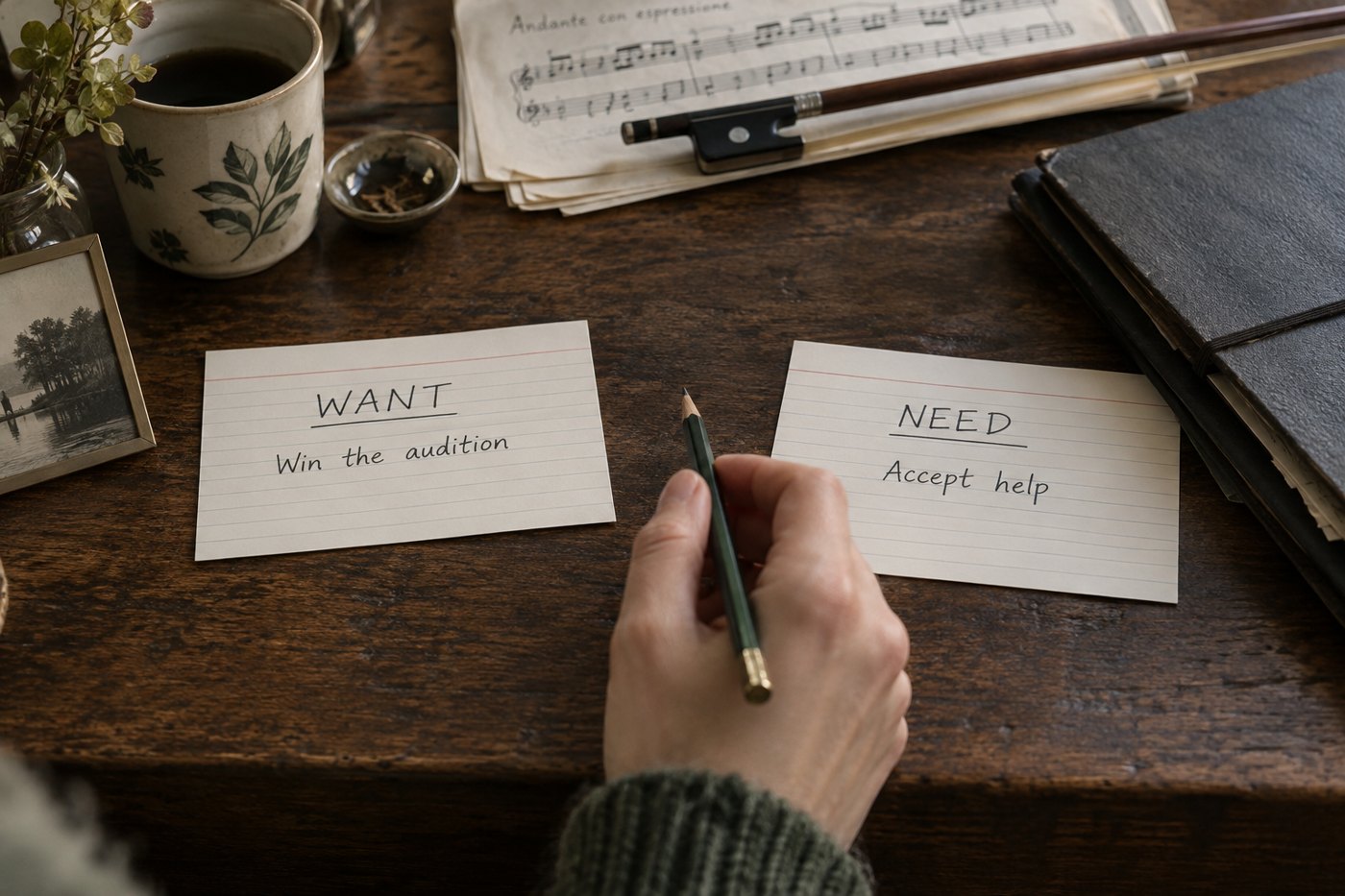
Separate what a character wants from what they need
A character can pursue a clear objective while misunderstanding the change that would make their life different.
Writing
Choose a viewpoint for what it lets the reader experience, including the information it keeps beyond reach.

Two siblings find an unfamiliar name in their mother's address book. One recognises it and hopes the other will turn the page. The other believes they are sorting ordinary paperwork. Either person could tell the scene, but the reader's experience will be different. From the first viewpoint, the scene carries concealment. From the second, it carries curiosity and the gradual detection of an odd response.
Before choosing a narrator for an entire novel, try a difficult scene from the available positions. Write a short passage from each, using the same external events. Do not merely replace 'I' with 'she'. Change what gets noticed, what gets misunderstood, what can be remembered and what cannot be known. The differences reveal which experience serves the book.
A viewpoint is a limit as well as an access point. It determines which private thoughts you may state directly and which must be inferred from conduct. Those limits can create suspense, intimacy or irony. Decide what kind of uncertainty you want readers to inhabit before choosing the person with the most convenient information.
The person most visibly active is not always the most useful viewpoint character. At an audition, the performer has an obvious objective. A sibling waiting outside might be confronting a different decision: whether to reveal that the promised ride home is gone. Both have stakes, but they generate different stories. Choose the position that connects the scene to the book's larger concerns.
Ask what the viewpoint character can lose, what they are trying to learn and what they are unwilling to see. A character with a strong interpretation of events can give even familiar action a distinctive shape. They may notice an expensive coat before a trembling hand, or the timetable before the weather. Those selections become part of the narrative voice.
Avoid choosing a viewpoint solely because it allows you to hide a fact. Concealment can become artificial if a character repeatedly thinks around something they would naturally acknowledge. You can withhold an explanation from the reader, but the character's attention should remain psychologically plausible. If the whole scene exists to conceal one obvious thought, a different viewpoint or a different scene may work better.
First person gives the narrator a direct speaking position, but it does not automatically make a book intimate. A guarded first-person narrator can remain distant. Third person can stay extremely close to one character's perceptions and language. Test the sentences themselves rather than relying on the pronoun to supply an effect.
First person also raises the question of the telling occasion. Is the narrator recounting events years later, speaking as if they are happening now, or addressing someone in particular? You do not have to explain the occasion explicitly, but your choices about hindsight should agree. A narrator who knows the outcome may interpret earlier mistakes differently from the person who made them.
With third person, decide how much access the narrative has. A scene limited to one person's experience should not casually reveal another person's unspoken motive. If you want a broader narrator who moves among minds, establish that authority consistently. The issue is the reader's expectation of access, not a universal ban on any particular form.
An appealing first chapter may conceal a difficult long-term problem. Map several later scenes, including one where the chosen viewpoint character is absent, mistaken or passive. How will necessary information reach the reader? Can the book accommodate that route without repeated reports of more interesting events occurring elsewhere?
Do not solve every difficulty by adding another narrator immediately. Sometimes a missing event should remain missing because its aftermath is the story. Sometimes the main character needs a more active role. Multiple viewpoints can be the right choice, but they create new obligations: distinct attention, purposeful transitions and a reason to return to each person.
Write a brief viewpoint rule for the draft: for example, third person limited to the daughter within each scene, with no hindsight beyond her current knowledge. It is a reminder, not a theory of every possible narrative. During revision, mark places where the prose knows more than the rule allows.
When an exception seems necessary, ask what it accomplishes. You may decide to revise the rule rather than the sentence. What matters is that the reader can learn how the book handles access and then trust that arrangement. A deliberate viewpoint makes uncertainty meaningful; an accidental shift makes the reader wonder who is speaking.
Writing
A character can pursue a clear objective while misunderstanding the change that would make their life different.
Writing
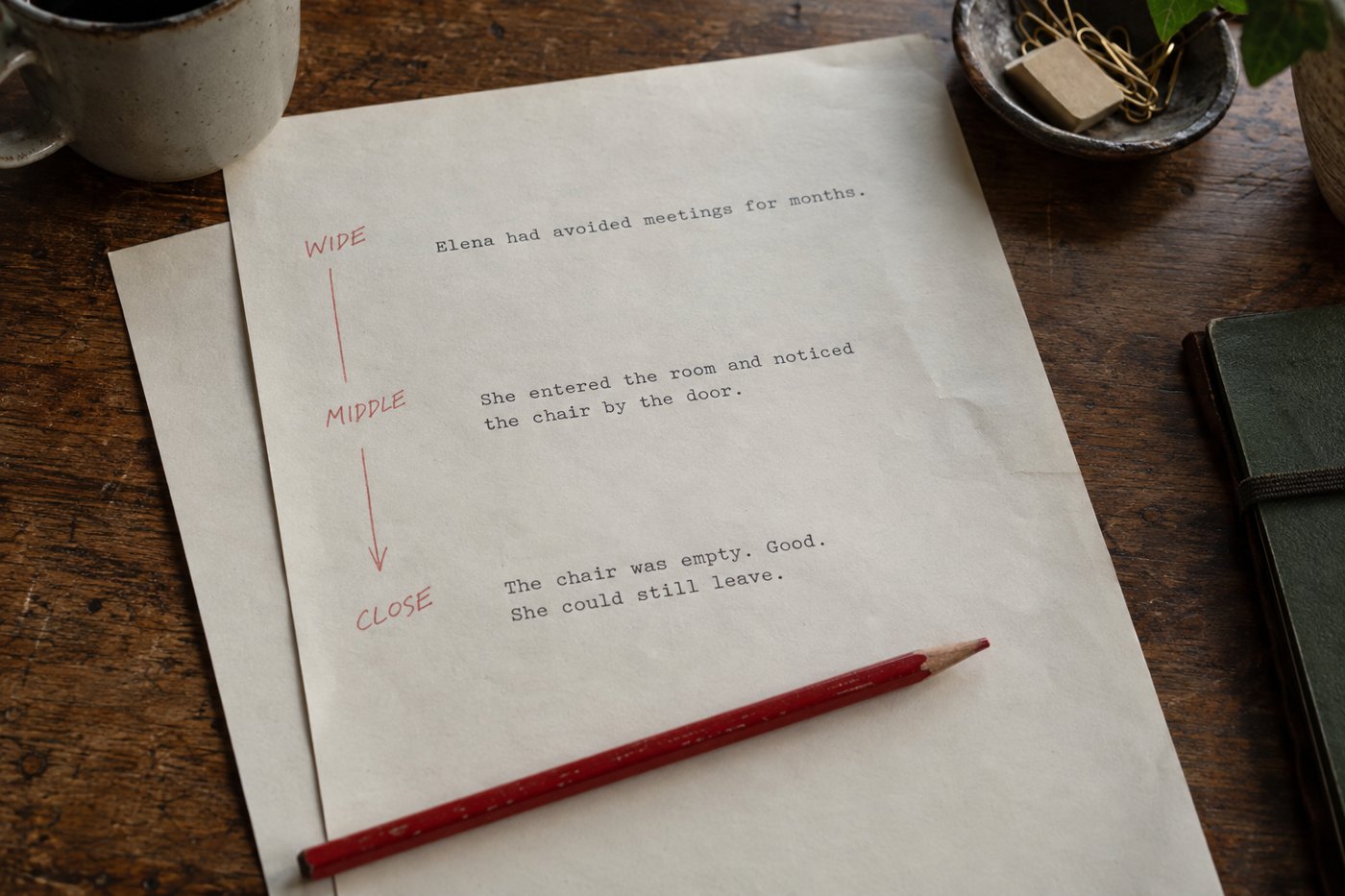
Narrative distance changes the reader’s closeness to a character’s experience while the viewpoint can remain the same.