Author marketing
Prepare the files people need to share your book
Package the cover, description and factual details so a host or collaborator can use the correct material.
Author marketing
Collect the facts and files an interviewer or event organiser needs without making them search through a long biography.
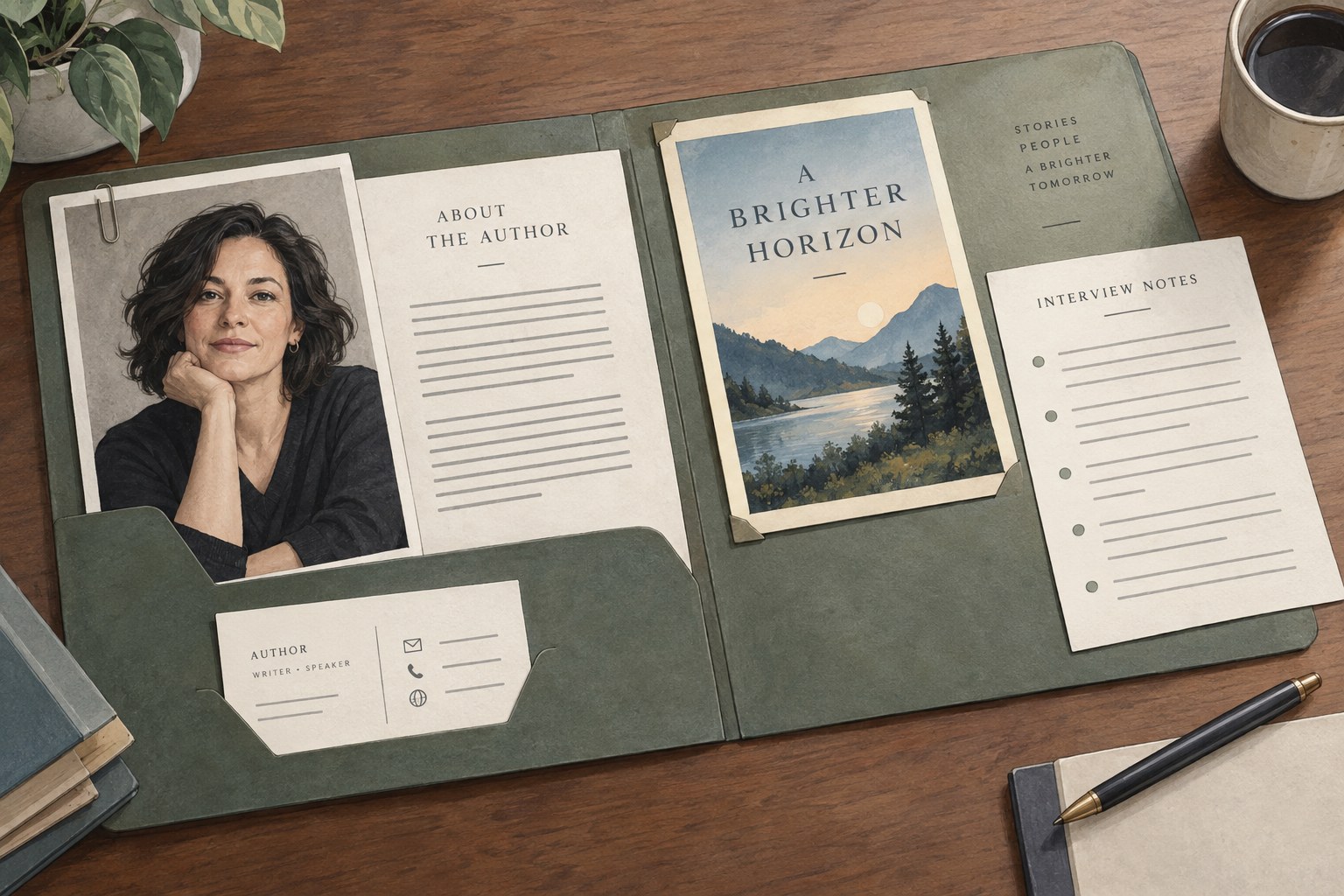
A press kit is a convenient set of materials, not evidence that the author has received press coverage. Its job is to help someone prepare an accurate introduction, listing or interview. Start with those tasks and leave out material that does not support them.
The core usually includes a short biography, book details, a description, approved cover imagery, an author photograph where available and a contact route. Add a longer biography or suggested discussion subjects when they are useful. A recipient should be able to identify the book and find the relevant files within a few moments.
State the title, subtitle, author name, edition or format information and other publication details that a recipient genuinely needs. Check spellings and dates against the final book record. If a detail has not been confirmed, do not bury that uncertainty in a document that otherwise appears ready for publication.
Write the biography in the form likely to be used by a host. Third-person wording is often convenient for an introduction, but there is no need for inflated praise. Include relevant work and experience that can be verified. Leave out invented awards, vague claims of authority and personal details that you do not want repeated publicly.
Suggested interview topics should be actual conversations the author can sustain. A novelist might discuss the choice of setting or the challenge behind a particular narrative structure. A nonfiction author might discuss the central question and the evidence that changed their approach. These suggestions are invitations, not a demand that the interviewer follow a script.
Provide cover and portrait images in common formats, with descriptive filenames and any necessary credit or usage instructions. Keep a high-resolution option separate from a smaller web version. If a photograph requires attribution, include the exact credit beside the file and in the kit's brief instructions.
A simple webpage or downloadable folder may be easier to update than a heavily designed PDF. A PDF can still be useful when recipients need a compact printable document. Choose the format according to the likely use and test it from outside your own account. Avoid access settings that require every visitor to request permission.
Open every file in the shared package. Check links, image quality, contact information and the consistency of the descriptions. Remove draft comments and outdated covers. Make sure the public folder does not expose unrelated working documents or personal records.
Include a date or version note so a recipient can recognise a current kit. Review it when a new book, contact arrangement or significant publication detail changes. The kit should save someone a round of clarification while giving them accurate material they can adapt to their own format.
Author marketing
Package the cover, description and factual details so a host or collaborator can use the correct material.
Author marketing
A useful interview pitch offers a relevant subject and a clear reason that the outlet’s audience might care.