
Publishing
Write a book description that tells readers what to expect
A description should help the right reader recognise the book’s central promise without turning into a synopsis or a list of claims.
Publishing
Print on demand changes when copies are manufactured; the book still needs prepared files, a checked proof and a route to readers.
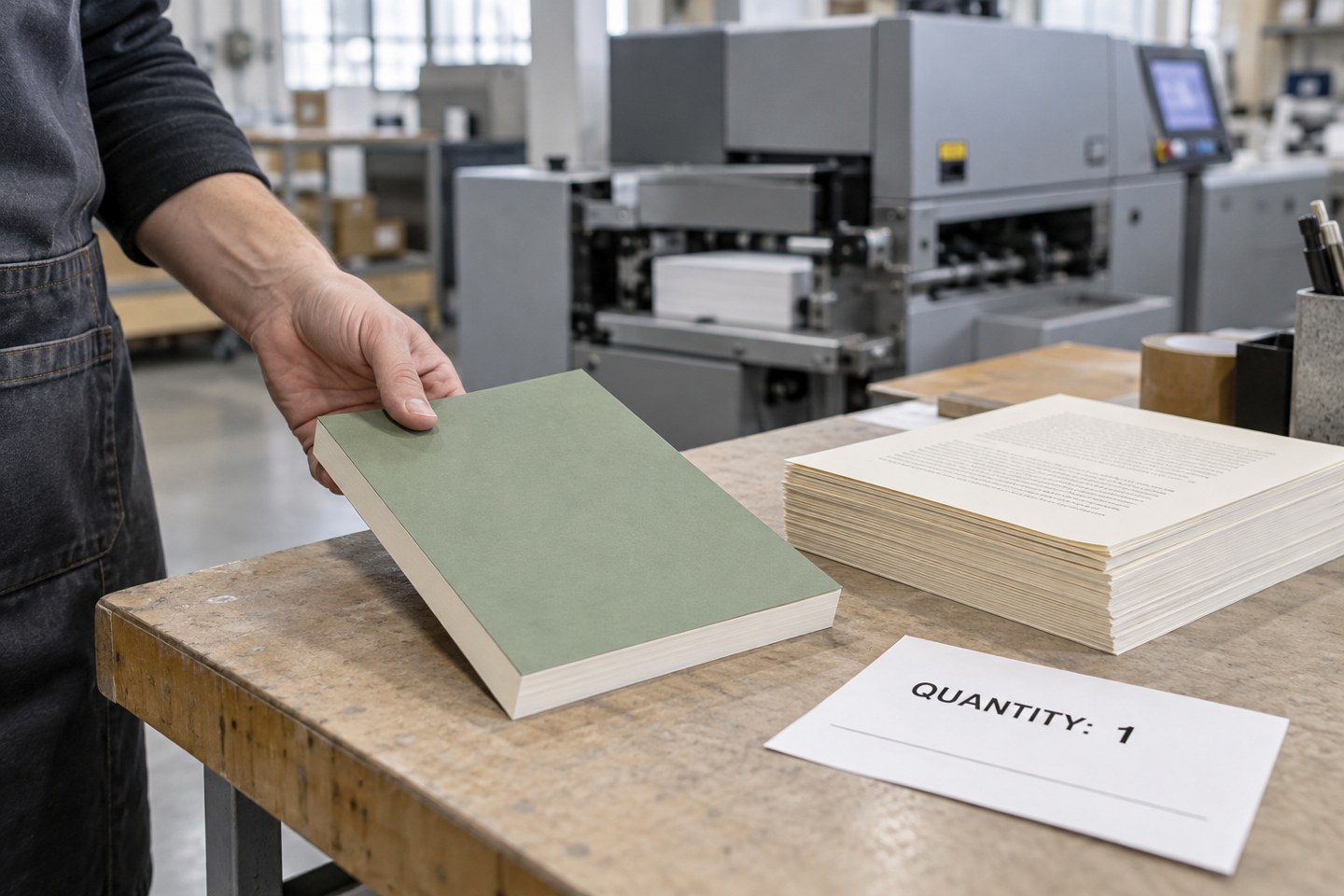
Print on demand allows copies to be produced in response to orders instead of requiring a publisher to begin with a large stock of finished books. Digital production makes very small quantities possible. The arrangement can reduce the amount of inventory held in advance, but it does not determine the quality of the manuscript, the cover or the publishing decisions behind them.
Think of it as one part of a production and fulfilment plan. The book still needs an edited text, suitable interior and cover files, accurate metadata and a way for readers to find and order it. A service may combine several of these functions, but the label print on demand does not tell you which functions are included.
IngramSpark's production guidance describes the role of digital printing in smaller quantities. Use current specifications from the service you intend to use when evaluating an actual book. Available papers, binding options, colours, sizes and production locations differ, and those details affect the result.
A small quantity can require less cash upfront while costing more per copy than a larger production run. Compare complete scenarios rather than choosing solely from the unit price. A stock order brings delivery, storage and the risk that copies remain unsold. An order-by-order arrangement may involve different printing and shipping costs for each route.
For example, imagine a book for which you expect a few scattered orders each month but have no firm evidence of a large initial audience. Holding hundreds of copies may create unnecessary exposure. If you instead have a confirmed event order, obtaining a quotation for that quantity may be worthwhile. The useful distinction is the evidence of demand, not a general belief that one printing method is always cheaper.
Include the channel between printer and reader. A copy ordered for your own event table can have a different cost structure from a copy sold through a retailer. Record the actual service terms, discounts, shipping and other applicable charges in your budget. Do not assume that a retail price minus the printing charge equals the amount you will receive.
The printer needs files that match its requirements. Confirm trim size, margins, bleed where applicable, paper choice and cover dimensions. A cover built for one page count or paper specification may not fit another. Treat the interior and cover as a coordinated pair rather than independent uploads.
Inspect a physical proof before approving the edition. Check readability, image reproduction, trimming, binding and the relationship between the cover and the pages. A screen preview can reveal file problems, but it cannot show every physical quality of a printed copy. Leave enough time to correct defects and examine the result again when necessary.
Remember that an easy upload process does not remove the need for version control. Record which files were approved and when a replacement was submitted. If a service allows file updates, check its current process and the effect on orders already in progress. Do not assume every copy in every channel changes at the moment a new file is uploaded.
Availability to order is different from demand. A book can be technically obtainable while few suitable readers know about it. Decide how the audience will discover the work and what information they need to choose it. That task remains even when production and shipping are handled elsewhere.
Consider occasions when you need copies by a particular date. Order with enough time for production, delivery and inspection, using the supplier's current estimates. An event plan should not depend on a last-minute assumption that a single-copy production service is instantaneous.
Also decide how you will handle a discovered error or a damaged copy in the channels you control. Keep contact details, approved files and order records accessible. Print on demand can make stock commitments more flexible, but a published book still benefits from deliberate administration and a clear record of what readers are receiving.
Publishing
A description should help the right reader recognise the book’s central promise without turning into a synopsis or a list of claims.
Publishing
A print quotation needs more than a quantity. Make the specification, delivery arrangements and approval process clear before comparing offers.