Author marketing
Plan an author website around reader questions
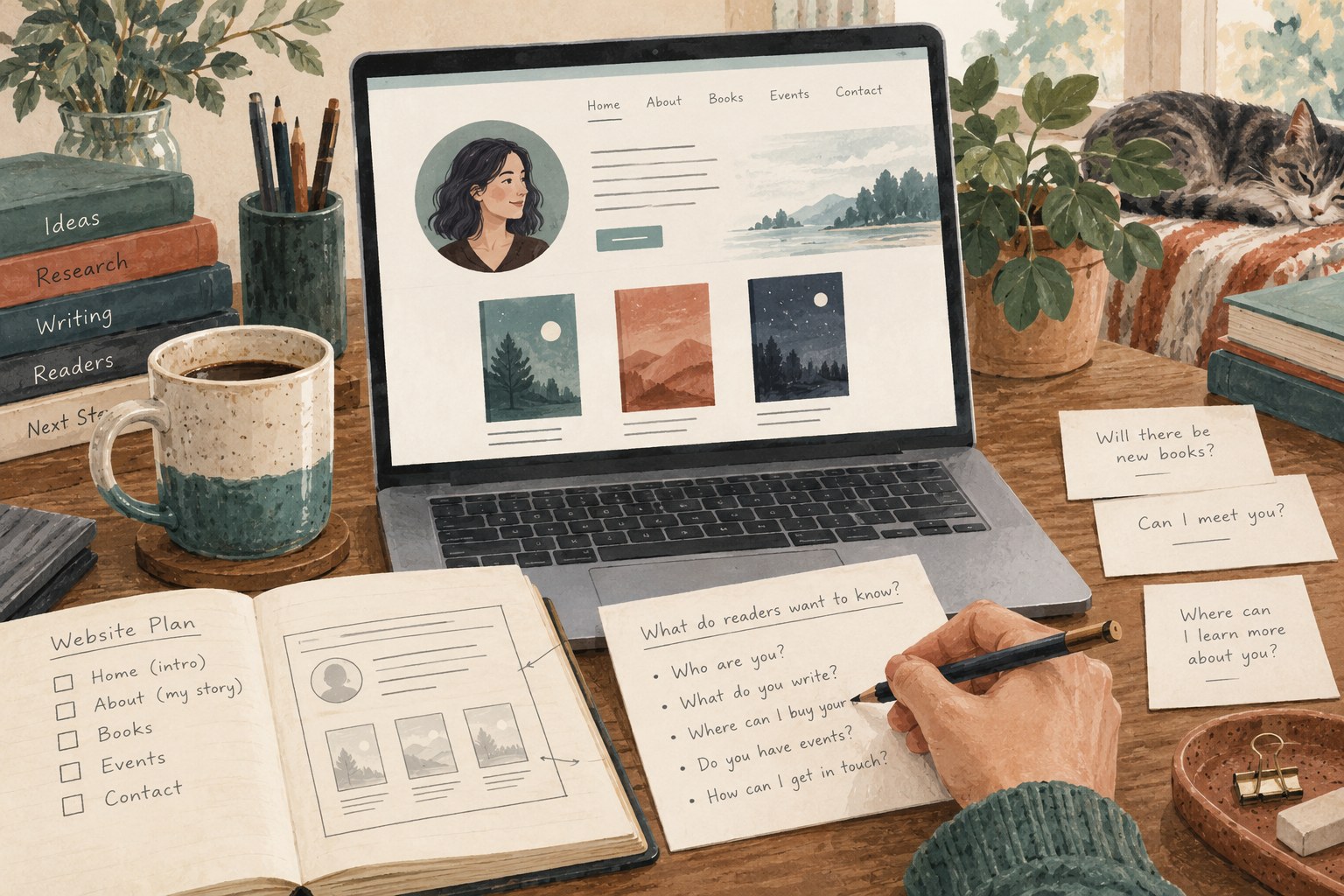
Organise an author website so readers can identify the books, find the right next step and contact the right person.
Author marketing
Give readers one stable destination for the description, sample and availability of a particular title.
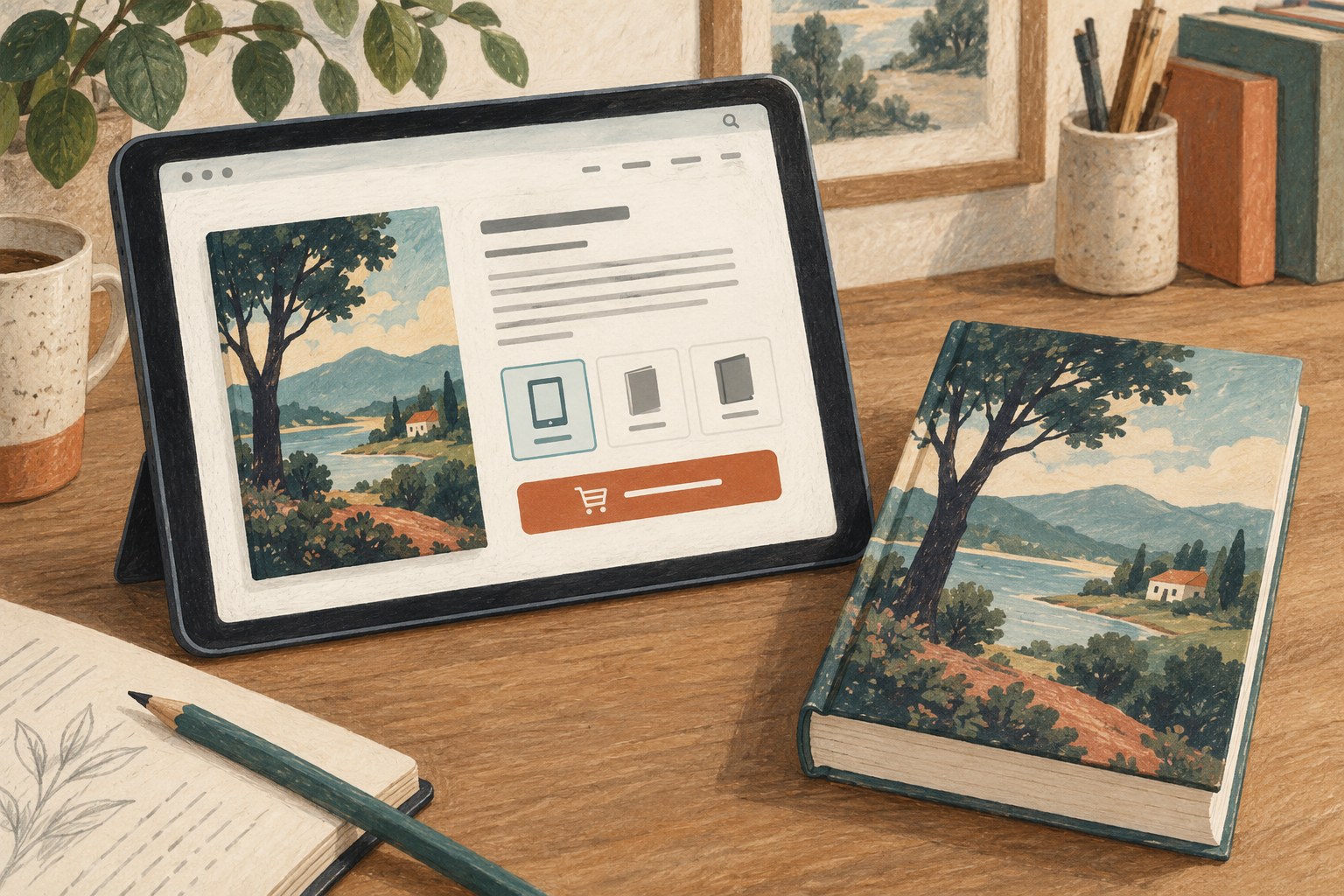
A book page should answer the basic recognition question near its beginning: is this the title I came to find? Show the full title, author name and cover together. Add series information or edition details when they help distinguish the book from related titles. Do not make visitors infer these facts from a cover image alone.
The page address should remain stable enough to use in interviews, newsletters and printed material. A descriptive URL is easier to recognise than a temporary campaign address. If a title changes or the page moves, preserve the journey through an appropriate redirect where your hosting setup supports it.
Assume the reader has not seen the homepage or your latest announcement. Explain the premise or subject, the relevant stakes or question, and the kind of book being offered. Avoid relying on “the new one” or a reference to a previous launch. Such wording dates quickly and becomes confusing when a visitor arrives through an old link.
For nonfiction, describe what the book covers and any meaningful boundaries. A beginner's introduction should not sound like a comprehensive professional reference. For fiction, give enough situation and conflict to orient the reader without recounting every plot development. The description should invite an informed choice.
If the book is part of a series, state its position and whether readers should start elsewhere. Link to the relevant earlier title when possible. A clear series relationship is more helpful than leaving visitors to decode numbers embedded in cover artwork.
Group availability links by format or destination when that distinction matters. Label a sample as a sample, a retailer link as a retailer link and a direct purchase as a purchase. Do not use identical “Learn more” buttons for different actions. A reader should know whether the next click will open an extract, leave the site or begin a transaction.
Keep quotations and endorsements accurate and permissioned. Identify their source without implying broader support than was given. A short relevant quotation can help, but a page does not need a wall of praise to function. The book's own description and sample should remain easy to find.
Test the page on a narrow screen and inspect every external link. Covers should remain clear without making the text awkward to read. A downloadable extract needs an informative filename and a sensible reading format. If the page offers several editions, confirm that each link points to the correct one.
Update details when availability, cover artwork or edition information changes. Keep an older title's page useful after launch by removing expired announcements and preserving its description and valid destinations. The page becomes a dependable reference for the book, rather than a snapshot of a single promotional week.
Author marketing
Organise an author website so readers can identify the books, find the right next step and contact the right person.

Author marketing
Define the editorial promise, workload and subscription process before inviting readers to join.