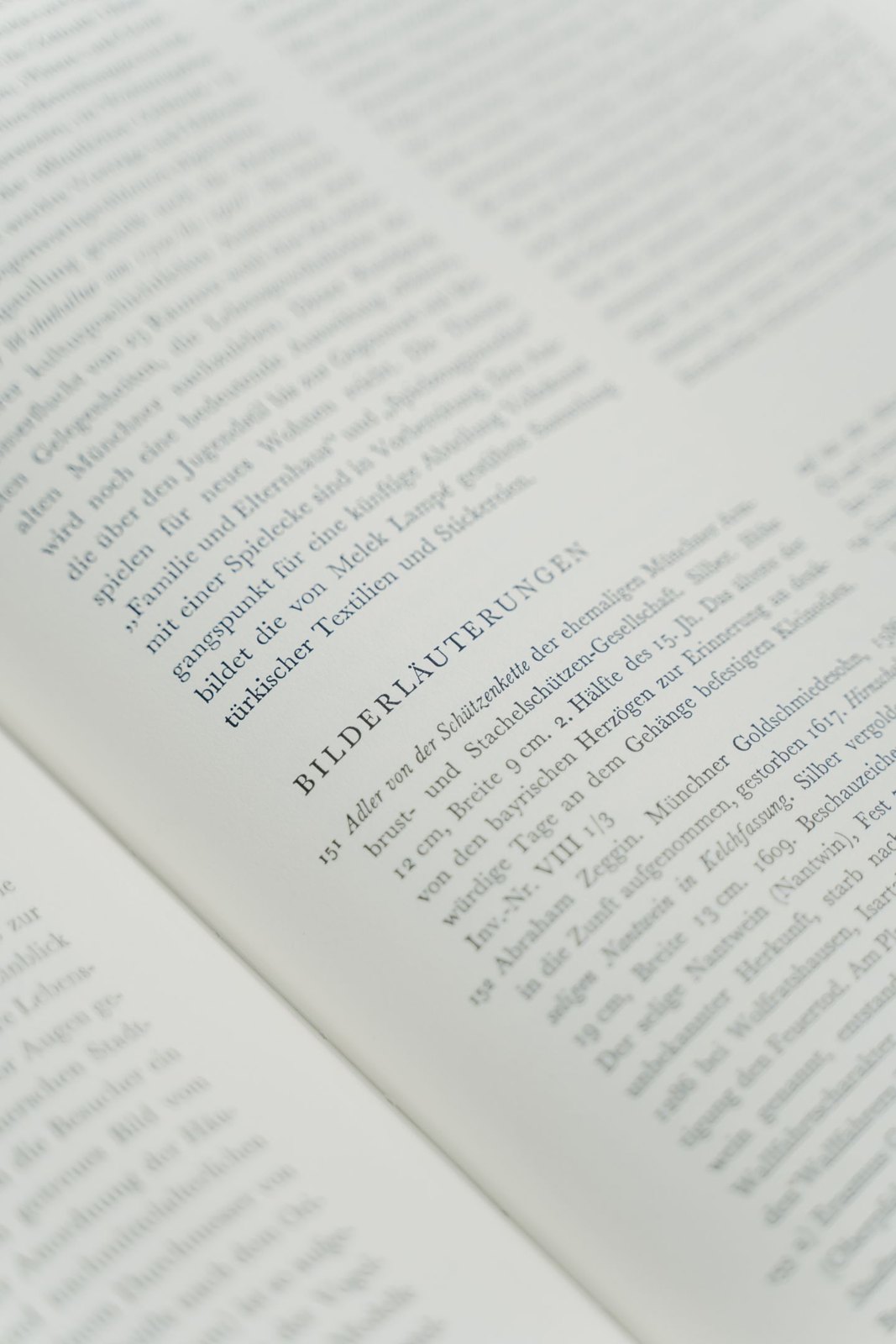
Book design
Balance type size, line length and spacing
Type size, line length and line spacing work together. Change them as a system and compare printed samples before settling the reading page.
Book design
A chapter opening should make the transition clear and belong to the rest of the book. Build it around the actual heading material, including the awkward cases.
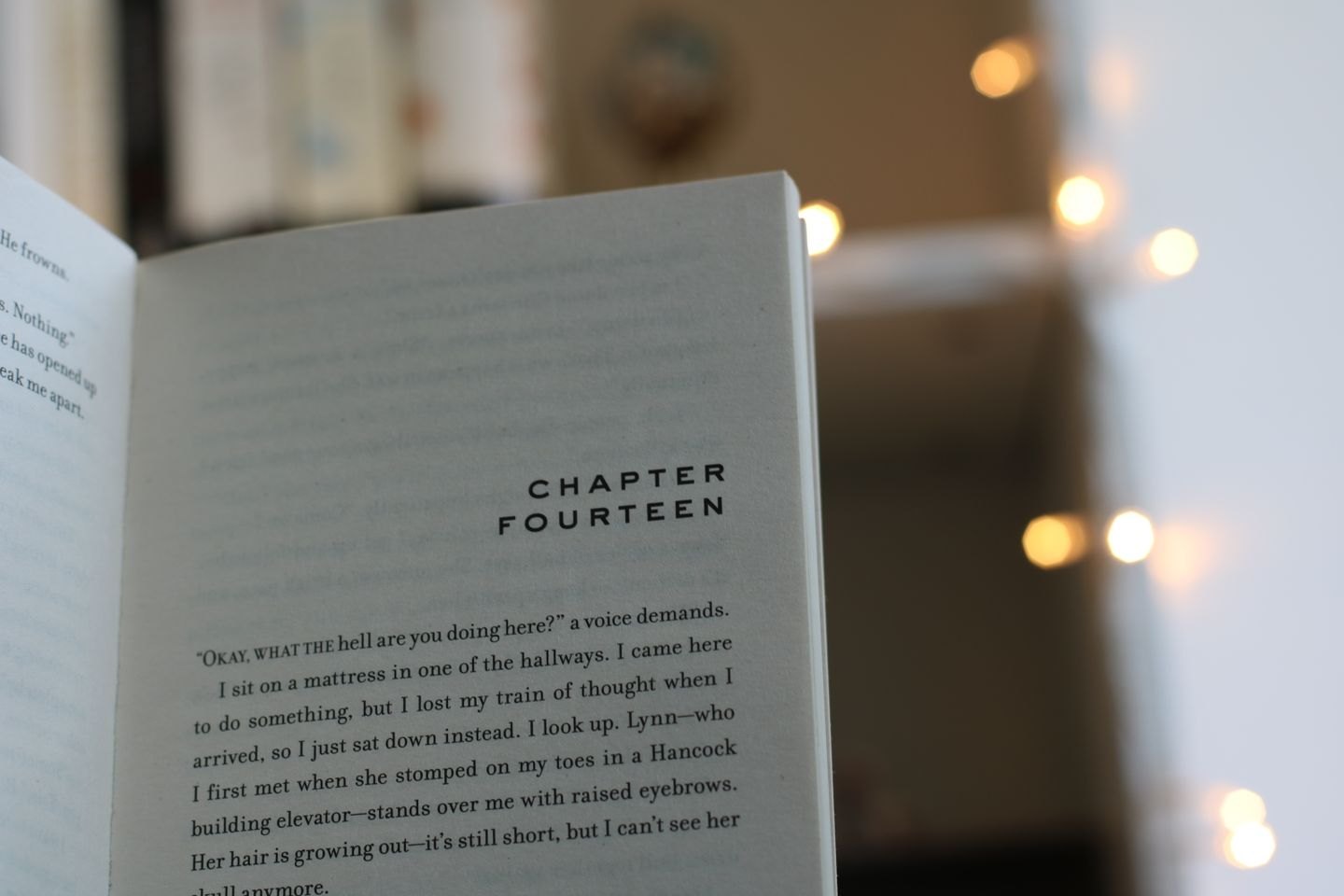
A chapter can begin with a number, a title, an epigraph, a place and date, or only the first line of text. Identify the material the book actually uses before arranging the page. Adding decorative elements to a chapter that does not need them can make the opening feel busier without making the transition clearer.
Set a hierarchy among the elements. If a title carries the chapter’s meaning, it may need more emphasis than the number. If the novel uses place and date to orient the reader, that information should be easy to find and consistently presented.
Choose the position of the opening text in relation to the whole page. A generous space above it can establish a pause, but the effect should be intentional. Compare several openings rather than judging the first chapter alone.
A short title fits almost any arrangement. Test the longest title, a title with punctuation, and any chapter that includes an epigraph or other extra material. Decide how the system behaves when a title wraps to another line. Do not solve every exception by shrinking the type independently.
Look at chapters with only a little text before a scene break or illustration. The chosen opening depth may leave an awkward fragment on the page. Consider whether the opening rule or the content arrangement needs adjustment, and keep any exception deliberate.
Review the relationship with running heads and page numbers. Decide which page furniture appears on a chapter opening and how it relates to ordinary text pages. Apply the decision through the layout structure so that it does not depend on remembering to hide an element by hand each time.
Use related typography and spacing even when the opener has a more expressive treatment. A decorative chapter number should not make the body text look as though it belongs to another book. At the same time, the transition needs enough distinction to be recognised.
Read from the end of one chapter through to the next. The opening exists within that sequence, not as an isolated design specimen. Check whether the intended pause feels natural and whether the reader can understand where the new material begins.
Export and inspect several finished openings after the last text changes. A longer title or an added epigraph may have altered the balance. Check the physical proof at reading size before approving the system for the complete book.
Book design
Type size, line length and line spacing work together. Change them as a system and compare printed samples before settling the reading page.
Book design
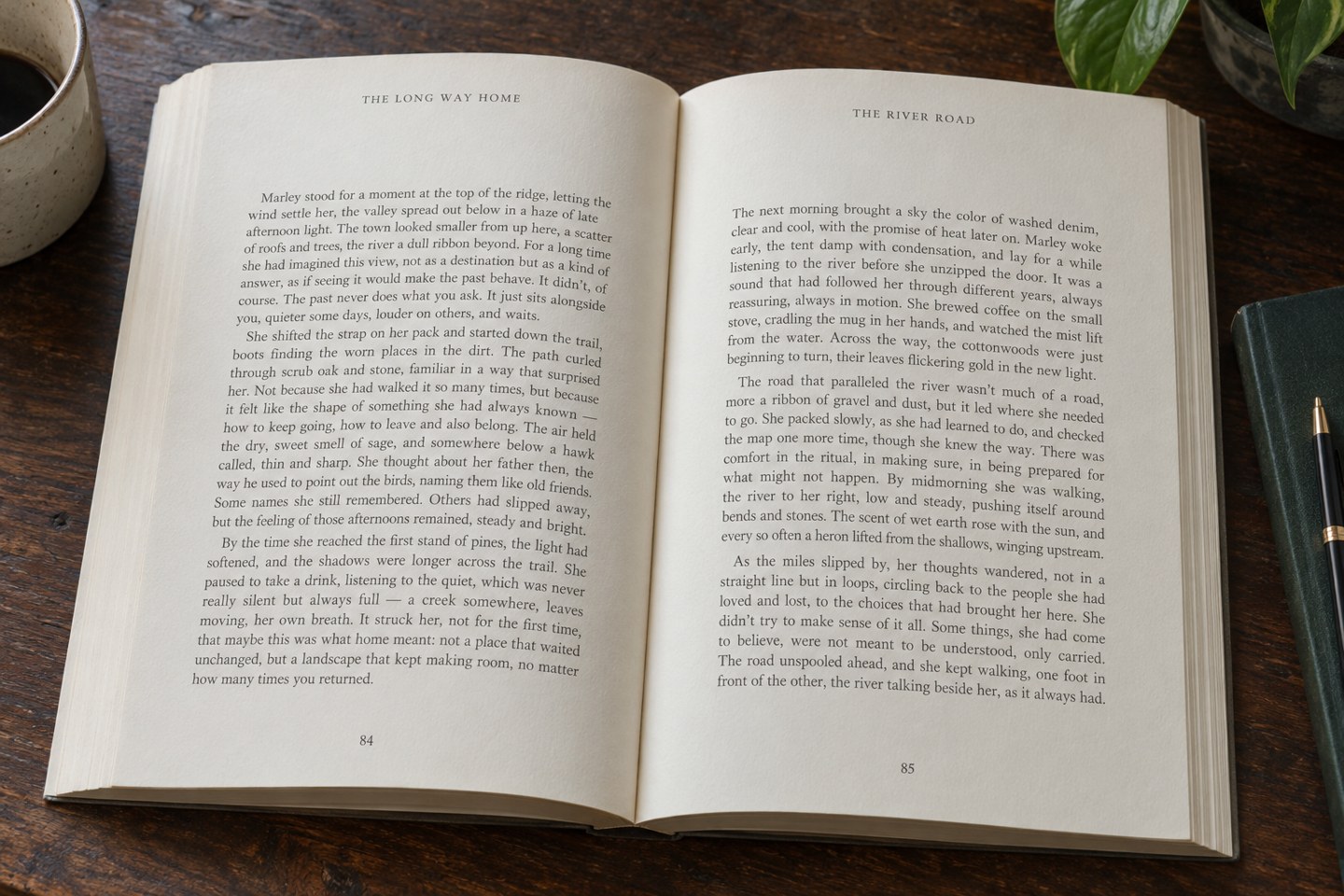
Running heads should give useful orientation while remaining visually subordinate to the text.