Editing
Read a scene for purpose, pressure and change
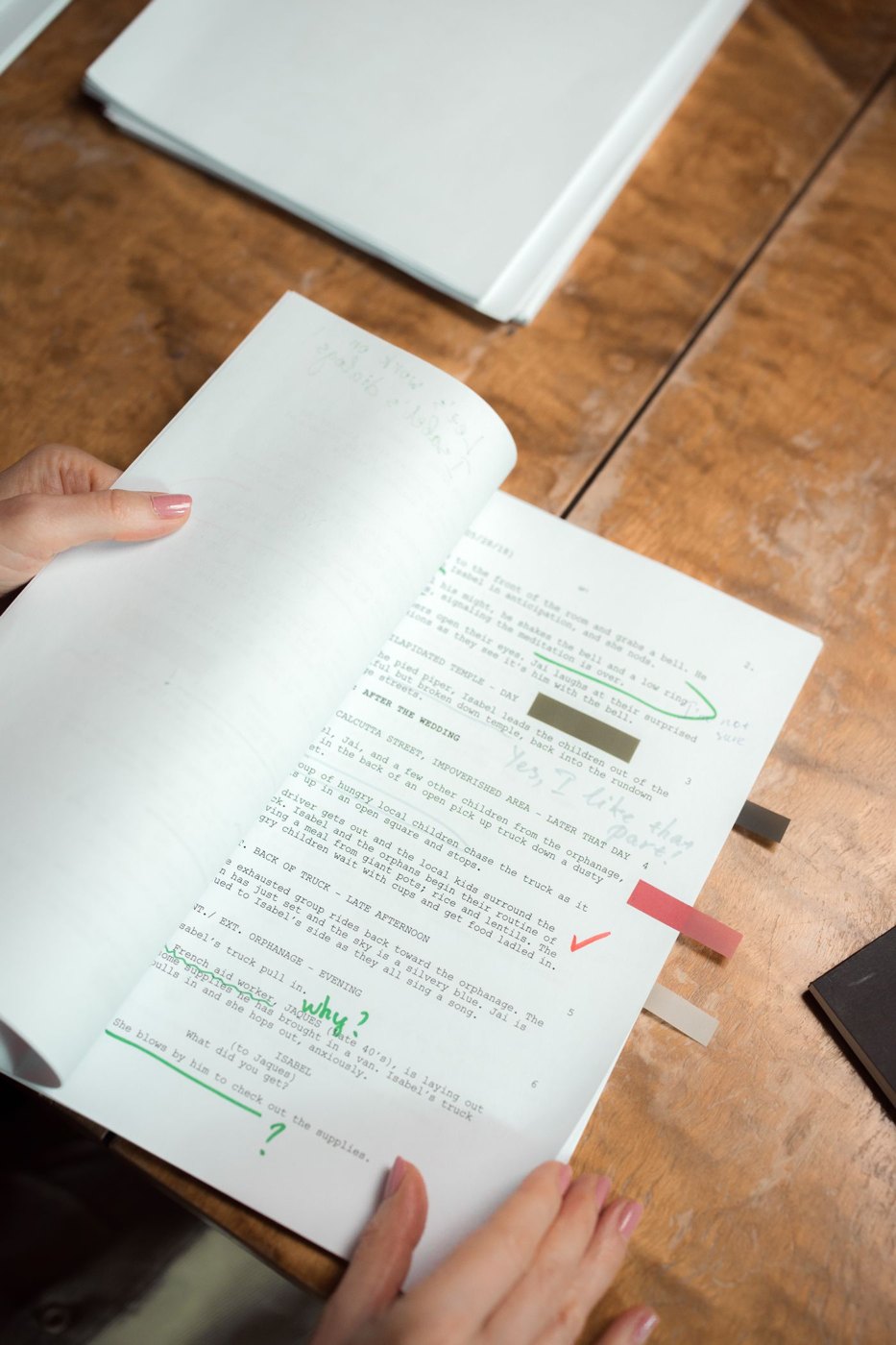
A focused scene audit follows the immediate aim, the resistance it meets and the situation left behind.
Editing
Repeated wording is easy to spot; repeated argumentative work requires a closer look at what each passage contributes.

An argument can repeat itself without using the same words. One paragraph may say that a process is confusing, the next that users struggle to understand it, and the third that its instructions are unclear. Unless those statements establish different causes or consequences, the reader may receive the same point three times.
Write a brief function beside each paragraph. Use verbs such as defines, demonstrates, qualifies, compares or answers. Then include the particular claim or question. When adjacent notes describe the same job, investigate whether the passages need their current space.
More evidence can strengthen a claim when it broadens or deepens the basis for believing it. A second example might show that a problem occurs under different conditions. It might reveal an exception that the argument must address. Simply adding another near-identical anecdote may contribute less.
For example, an essay proposing clearer signs in a public building could describe a visitor missing a turn, a delivery worker entering the wrong corridor and a staff member having to redirect people. Those examples might form one concise pattern. If each receives a full paragraph that concludes “the signs are confusing”, the structure may exaggerate the amount of reasoning supplied.
Ask what would be lost if an example disappeared. Sometimes the answer is credibility or a necessary contrast. Sometimes only length would be lost. Keep the strongest material for the job and avoid treating every collected example as something the reader must encounter.
A key term may need to recur for clarity. Replacing it with varied synonyms can make a stable concept appear to shift. A conclusion can also return to the opening question, provided it now answers that question with the benefit of the intervening discussion.
The distinction is development. An early statement may introduce a concern; a later return may explain its cause; the ending may show how the proposed change addresses it. Similar subject matter is doing different work at each point. Preserve that progression rather than cutting every repeated word mechanically.
A short reminder can help readers resume a thread after a substantial digression. Keep the reminder proportionate. If it restates the entire earlier argument, examine whether the digression belongs where it is or whether the reader needs a clearer transition instead.
When two paragraphs overlap, choose the one with the clearer claim and stronger support. Move any indispensable detail into it, then read the join. Combining passages often exposes a missing distinction that their repetition had concealed.
Sometimes the weaker paragraph should take on a new task. After establishing a problem, it could examine a limitation of the proposed solution rather than repeat the need for change. Add that material only if the argument requires it.
Read the shortened version for continuity and tone. Removing duplication should make the reasoning easier to follow, not merely faster. The reader still needs sufficient explanation to understand how the conclusion follows.
Editing
A focused scene audit follows the immediate aim, the resistance it meets and the situation left behind.
Editing
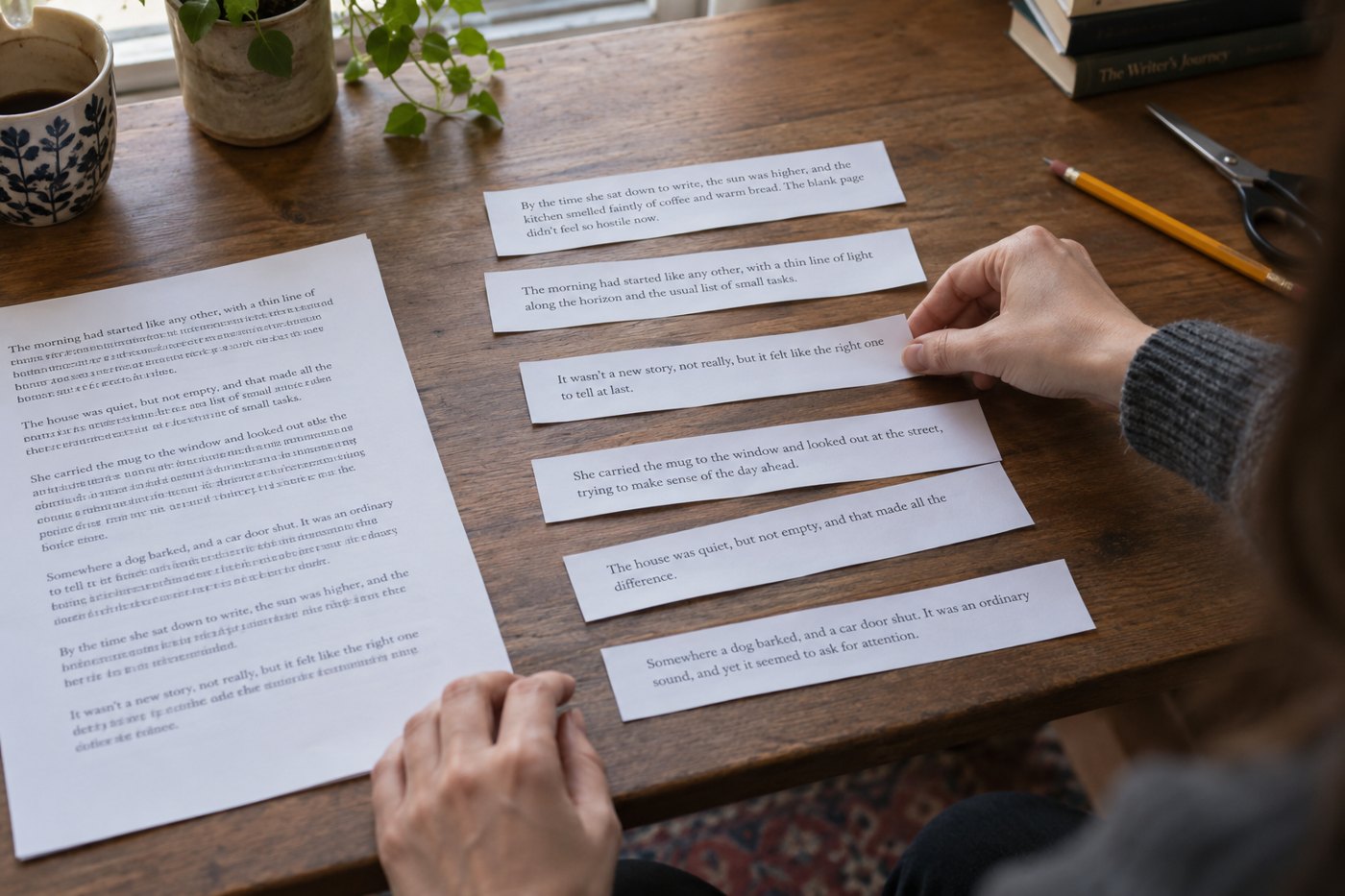
Paragraph order becomes easier to judge when you examine the job of each block before revising its sentences.