
Editing
What a sample edit can and cannot tell you
A short sample can reveal how an editor approaches your sentences. It cannot show every problem in a book or replace agreement about the full assignment.
Editing
An editor needs an answer that can be applied to the manuscript. Make the wording, location and final decision clear, especially when a query has several parts.

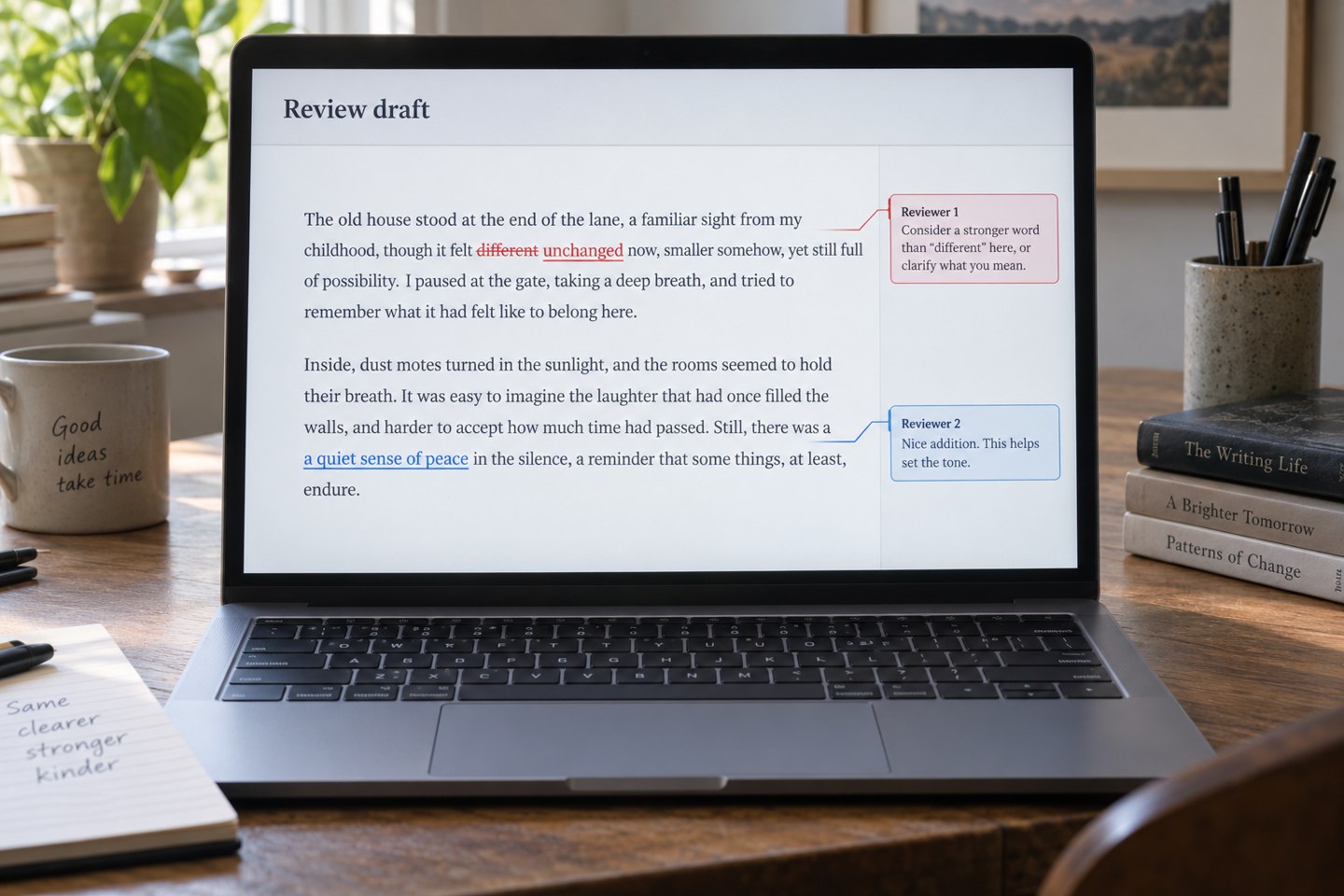
Use the query system agreed for the project. It might be comments in a document or a separate numbered list. Keep the original query identifier with the answer so the editor can find the passage even if the text moves. The CIEP describes author queries as part of both copyediting and proofreading, with the response method set by the project.
Read what is being asked before changing the sentence. A query about an unclear date may also reveal that the sequence of events is ambiguous. Answering only “Tuesday” can leave the larger problem untouched. If a query has two parts, respond to both, or identify the part you still need to investigate.
Give exact replacement wording when the instruction requires it. “Make this less formal” asks the editor to guess. “Replace the first sentence with…” gives a concrete instruction that can be checked. If the proposed change is already correct, a clear acceptance may be all that is needed.
Imagine a query asks whether Mara arrives before or after the meeting. You reply that she arrives afterwards, then remember a scene in which she speaks during it. Resolve the contradiction before sending the response. If the decision changes later, explicitly replace the earlier instruction instead of adding a second answer that looks equally current.
Check related passages when your answer changes a fact. A name, date or definition may appear in a caption, a table and another chapter. Identify those consequences, or ask how the wider change should be handled. Do not quietly alter a separate copy while the editor continues working on the agreed file.
If you cannot answer yet, say what is missing and when you expect to resolve it. A visible open query is easier to manage than a confident guess. At proof stage, consider whether a proposed addition changes the layout and discuss that consequence before treating it as a minor correction.
Before returning the file, scan for unanswered queries and contradictory responses. Keep a copy of the submitted answers. The useful record is the decision that was delivered, not the version you remember intending to send.
Editing
A short sample can reveal how an editor approaches your sentences. It cannot show every problem in a book or replace agreement about the full assignment.
Editing
A considered review preserves the reasons behind an edit and leaves a readable, agreed manuscript.