
Writing
Ask for feedback you can use
Tell a reader what stage the draft has reached, what you need to learn and what kind of response would help.
Writing
A first draft is complete when the whole work can be read and assessed, even though many local decisions remain provisional.
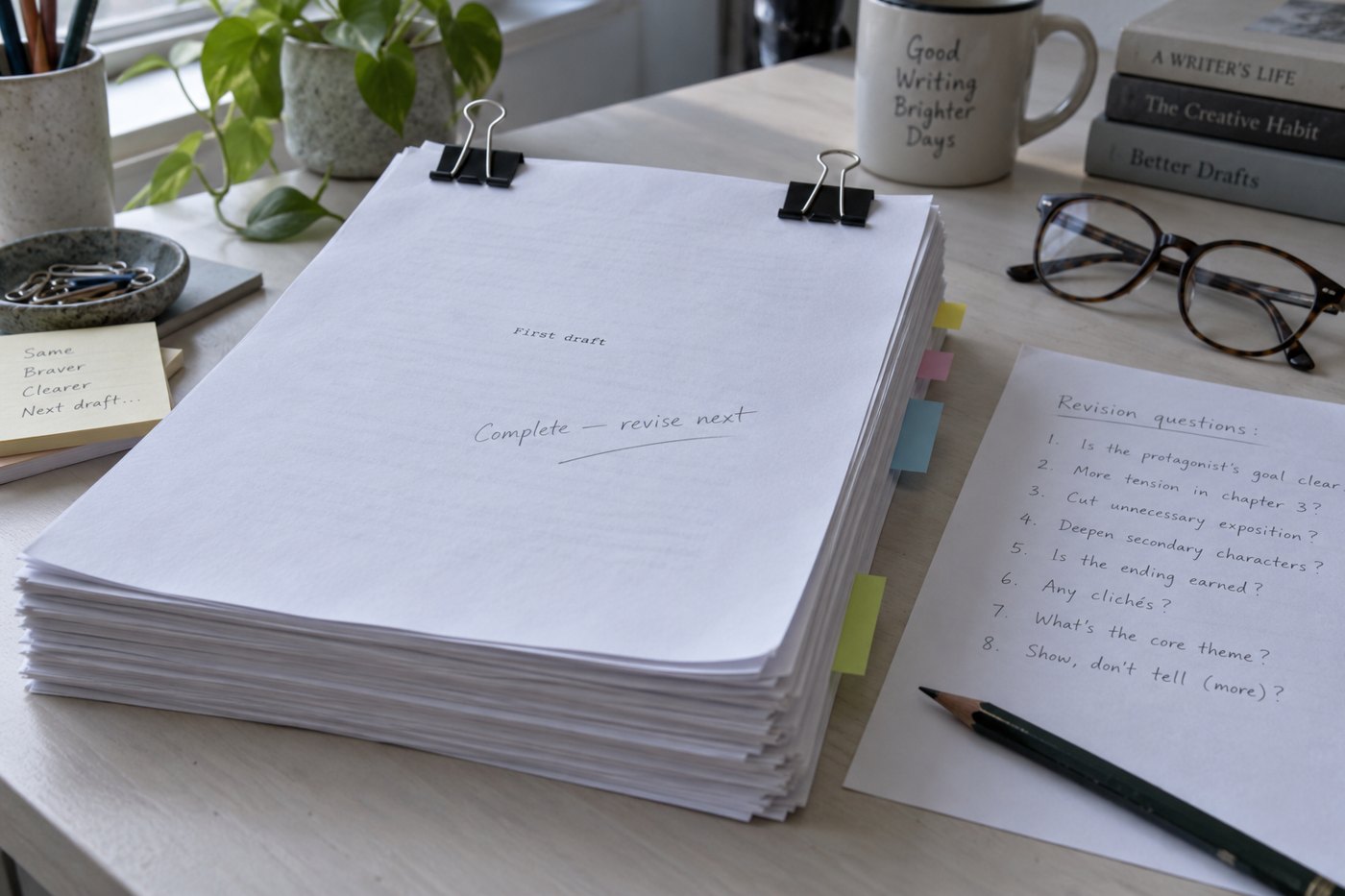
The last sentence does not always end the drafting process. You may reach it and immediately notice a weak opening, a missing transition or an awkward chapter. Without a definition of completion, those discoveries can pull you into another circuit of the manuscript before you have ever considered it as a whole.
Choose a finish line that matches the kind of work you are making. For a novel, it might mean a continuous account of the main action from the opening situation to its consequences. For a nonfiction book, it might mean that every planned part contains an actual explanation, rather than a heading followed by “write this later”. Neither definition requires elegant sentences throughout.
Write the finish line in a short project note. It should describe an inspectable state of the manuscript. “Good enough to feel proud of” is difficult to measure on a tired afternoon. “A reader can follow the central argument through all chapters, with unresolved facts visibly marked” gives you something concrete to check.
Read through the draft's sequence, or review a brief chapter map, to find missing essential material. A story may require the decision that makes its ending possible. An explanation may introduce a method but never show how its final step works. Those gaps can prevent you from assessing the whole and may need to be filled before calling the draft complete.
Roughness is different. A scene can fulfil its essential purpose while using repetitive dialogue. A paragraph can communicate a necessary distinction through clumsy phrasing. Such passages belong on a revision list, but they need not reopen the drafting stage indefinitely. The question is whether enough exists to judge what the work is trying to do.
Imagine a first draft about siblings deciding the future of a small cinema. The final chapter shows their public decision, but the earlier private conversation that explains one sibling's change of mind is still missing. Writing a rough version of that conversation may be necessary now. Perfecting the description of the cinema's foyer probably is not.
A complete first draft can contain unresolved items if they are visible and do not conceal an absent foundation. Use searchable notes for facts to verify, names to standardise and examples that need better support. Keep guesses marked as guesses. Familiarity with a sentence should never become a substitute for checking it.
Sort these notes by what they affect. A detail confined to one sentence can wait for a later pass. A discovery that changes the book's central explanation belongs near the top of the revision plan. This distinction prevents a long list of small corrections from obscuring a single consequential uncertainty.
If the manuscript is going to another reader, explain the provisional material in a concise cover note. Do not ask the reader to reconstruct unwritten sections from your intentions. Supply the pages needed for the particular feedback you are requesting, and make the limits of the draft clear.
Save an identifiable copy before beginning substantial revision. Use a filename or version note that distinguishes it from the working document. The purpose is simple: you should be able to see what existed at the moment you considered the whole draft finished, without relying on memory or an ambiguous series of files called “final”.
Write a short handover note to your revising self. Record what you believe the work is about, what seems strongest and the few questions that most need attention. Keep the note separate from the manuscript if inserting it would confuse a future reader. This is a record of your present assessment, not a commitment to preserve every current choice.
Taking a break can help you encounter the pages with less immediate attachment, but there is no required interval that guarantees perspective. If a deadline leaves little room, change the task instead: read for structure without editing, or ask a suitable reader to report where the intended progression becomes unclear.
The first revision decision should follow from what the completed draft reveals. Perhaps the book begins too early, two chapters answer the same question, or a minor character has become essential. Those discoveries are difficult to make while every sentence remains an emergency.
Completion gives you a stable object to examine. You can now decide which changes matter, in what order, and how you will recognise an improvement. Leave the imperfections visible long enough to understand them. Finishing this stage means the manuscript is ready for a different kind of work.
Writing
Tell a reader what stage the draft has reached, what you need to learn and what kind of response would help.

Writing
A focused question helps a writing group describe its reading experience and keeps the discussion useful to the next revision.