Writing
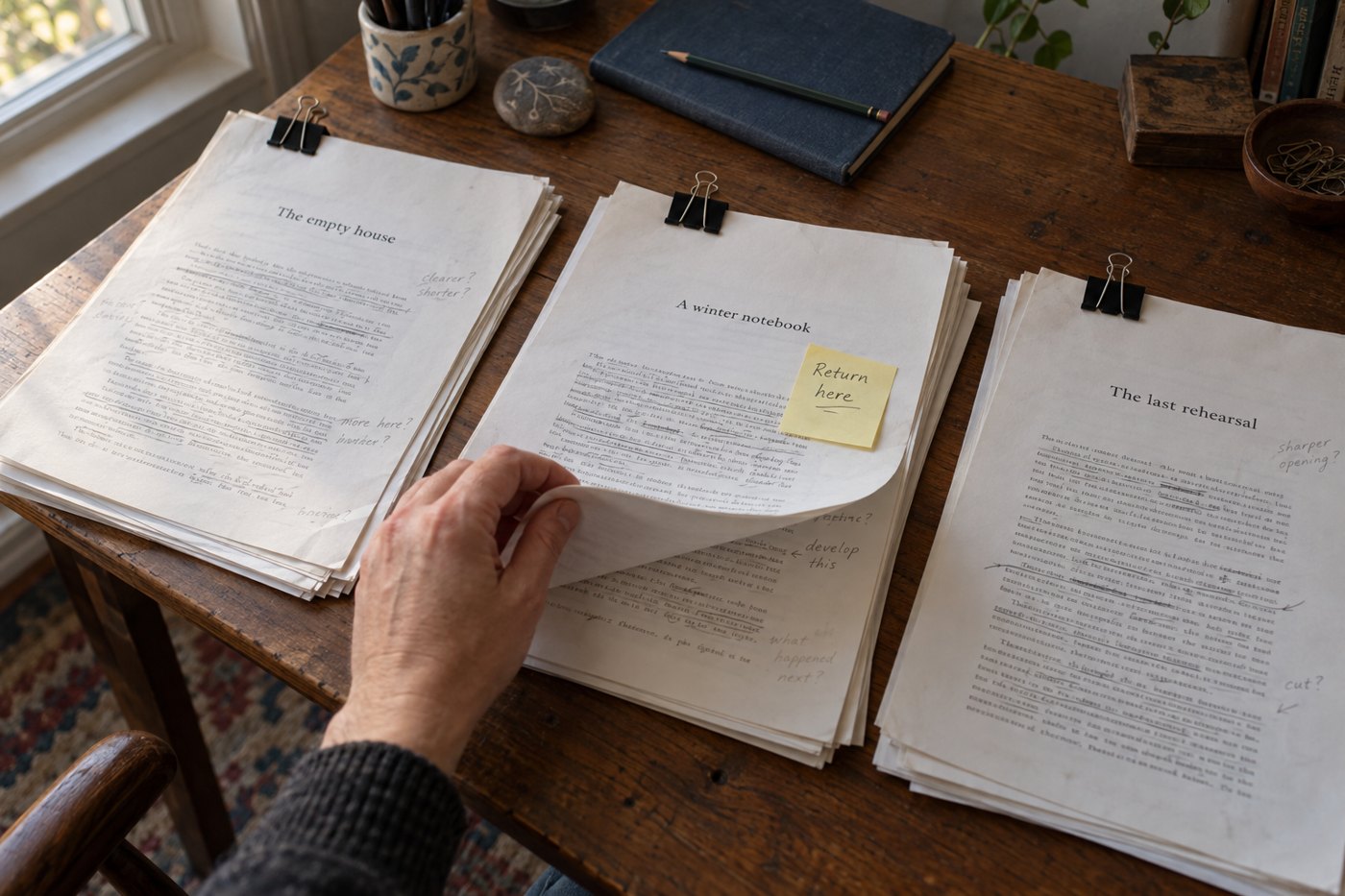
Choosing which unfinished draft to return to
Compare unfinished projects by their remaining questions and workable next steps, rather than by guilt or accumulated pages.
Writing
A focused question helps a writing group describe its reading experience and keeps the discussion useful to the next revision.

A request for “any thoughts” asks readers to choose the purpose of the session for you. They may discuss punctuation when you are worried about a character's decision, or debate the premise when you need to know whether a transition is clear. Give them a small amount of context and one or two questions that match the draft's current stage.
Phrase those questions in terms of what readers can observe. “At what point did you understand why Mara stayed?” invites an account of their reading. “Is Mara sympathetic enough?” encourages a broader judgment that may be harder to translate into revision. Both can matter, but the first usually reveals more about how the existing pages work.
Tell the group what kind of material it is seeing: an opening, a middle chapter, a complete story or a rough argument. If essential context is absent, supply a brief note rather than narrating the whole book before anyone reads. Too much explanation can make it difficult to distinguish what the manuscript communicates from what your introduction supplied.
For an invented example, a writer bringing a scene about a disputed inheritance might ask whether the reader can distinguish what each sibling wants, and where the conversation's emotional direction changes. Those questions leave room for surprise. A reader might notice that the physical handling of a letter carries more tension than the speech the writer considered central.
During discussion, record moments of confusion, expectation and changed attention. A proposed solution often contains useful evidence even when you would never use the solution itself. “Make the neighbour confess earlier” may indicate that the reader has already inferred the confession and finds the delay unproductive. Ask what led to that inference and where it happened.
Different responses do not require a vote. If one reader understands a withheld fact and another does not, examine what each noticed. Familiarity with the subject, genre expectations and attention to a particular detail can all affect the experience. Your task is to decide what a reader needs from this passage and whether the prose provides it reliably enough.
Avoid explaining every intention as soon as it is questioned. You can clarify the intended effect after hearing the response, but an explanation delivered in conversation does not repair the page. It may be more helpful to ask the group to identify the sentence that produced its interpretation.
Afterward, separate observations from suggested changes. Let the notes settle, then select the revision that addresses the strongest problem while preserving the work's direction. You do not need to implement every comment to make good use of the session. A writing group has helped when you leave with clearer evidence about the draft and a manageable next decision.
Writing
Compare unfinished projects by their remaining questions and workable next steps, rather than by guilt or accumulated pages.

Writing
Tell a reader what stage the draft has reached, what you need to learn and what kind of response would help.