
Writing
Turn a summary into a scene
Select one moment of pressure, then let action and response carry the information that summary currently supplies.
Writing
Compare unfinished projects by their remaining questions and workable next steps, rather than by guilt or accumulated pages.
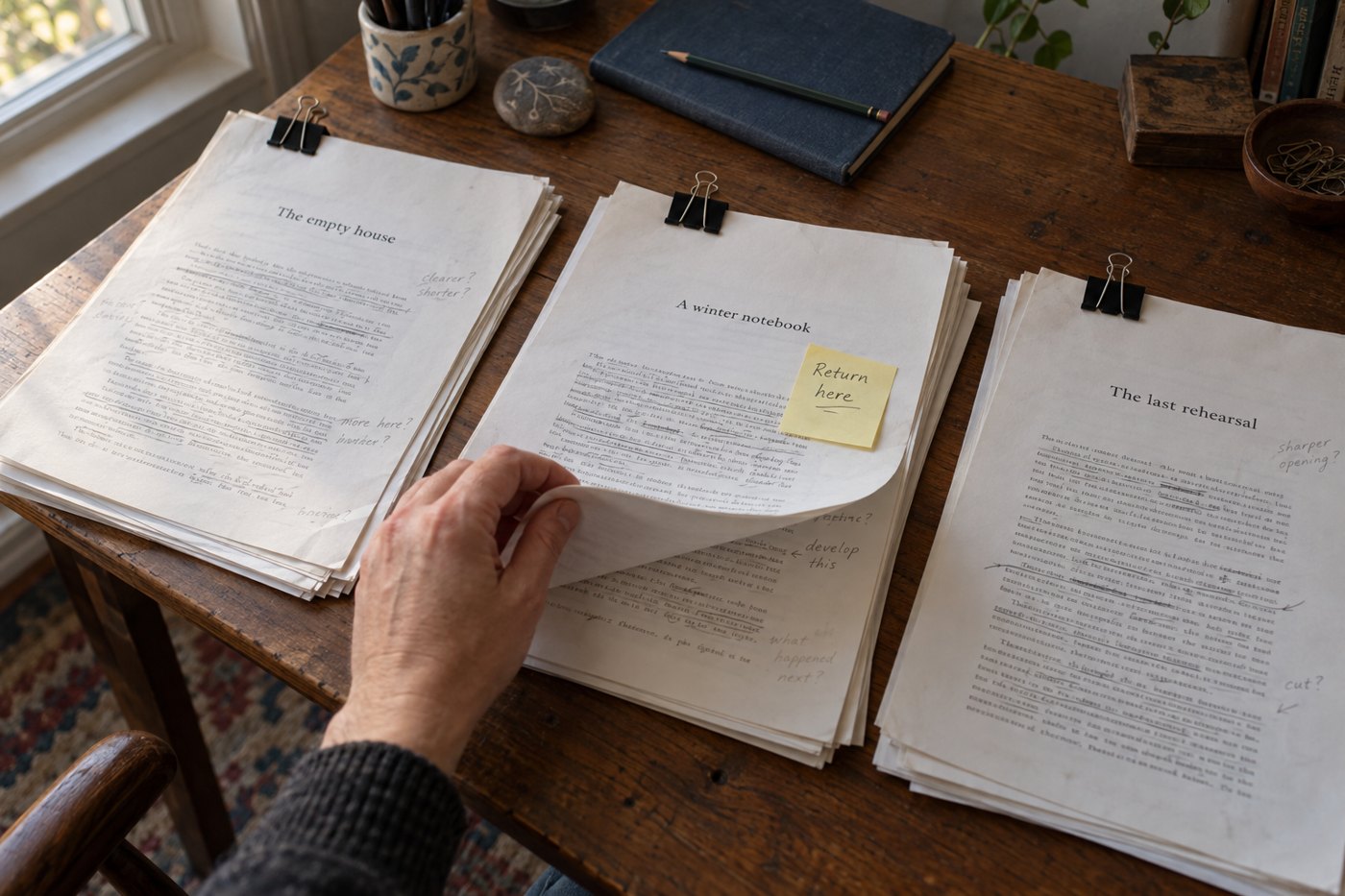
An unfinished draft can carry several kinds of obligation: the time already spent on it, the excitement you once felt and the promise you made to finish. None of those tells you exactly what work the project needs now. Begin by reading enough to recover its central interest, without immediately correcting sentences.
Write a short description of the question, conflict or subject that still attracts you. Be specific. “A family story” tells you less than “two cousins discover that protecting the same house requires incompatible choices”. If you cannot identify an active interest, the project may need a new premise before another drafting schedule will help.
A draft missing its last chapter presents a different problem from a folder of vivid but unrelated scenes. One may need an ending decision; the other may need a governing relationship or sequence. Count neither as simply “half done”. Page totals conceal the nature of the remaining work.
For each candidate, identify the next substantial decision. An essay might need to choose between a personal account and an explanation for beginners. A novel might have an ending but no credible route to it. A research project might depend on access to a source you cannot currently obtain. These differences make a more useful comparison than which file is oldest.
Also note what already works. A compelling central relationship, a well-supported argument or a voice you want to hear again gives the return a foundation. The assessment should include the draft's resources as well as its defects.
Choose a small trial that tests the real uncertainty. Rewrite a pivotal exchange, sketch the missing sequence or produce a paragraph explaining the intended reader's problem. Avoid spending the entire trial on easy surface corrections if the project is stalled for a structural reason.
For example, suppose an abandoned travel essay contains strong observations but no clear direction. A useful trial might arrange five moments around the question of why the narrator kept returning to one street. Correcting punctuation throughout the existing pages would make the document tidier without testing whether that organising question can hold it together.
After the trial, record what became clearer and what remains resistant. Difficulty alone does not disqualify a project. The more useful sign is whether the work produces meaningful decisions or repeatedly returns you to an interest that has already faded.
Select one project for a defined period or milestone. That might be a revised opening and an outline, rather than an unconditional promise to finish the book. Put the other drafts somewhere accessible and leave a brief note describing their state. Deliberately postponing a project is different from losing track of it.
The choice can be revisited after you have new evidence. You are deciding where to place your next useful effort. A draft that remains unfinished today may become workable when your questions, available material or interests change.
Writing
Select one moment of pressure, then let action and response carry the information that summary currently supplies.

Writing
A focused question helps a writing group describe its reading experience and keeps the discussion useful to the next revision.