Writing
When a flashback earns its place
A flashback is most useful when an earlier event changes the meaning or direction of the present scene.
Writing
Several viewpoint characters need distinct reasons to be present and a shared story that their perspectives can change.
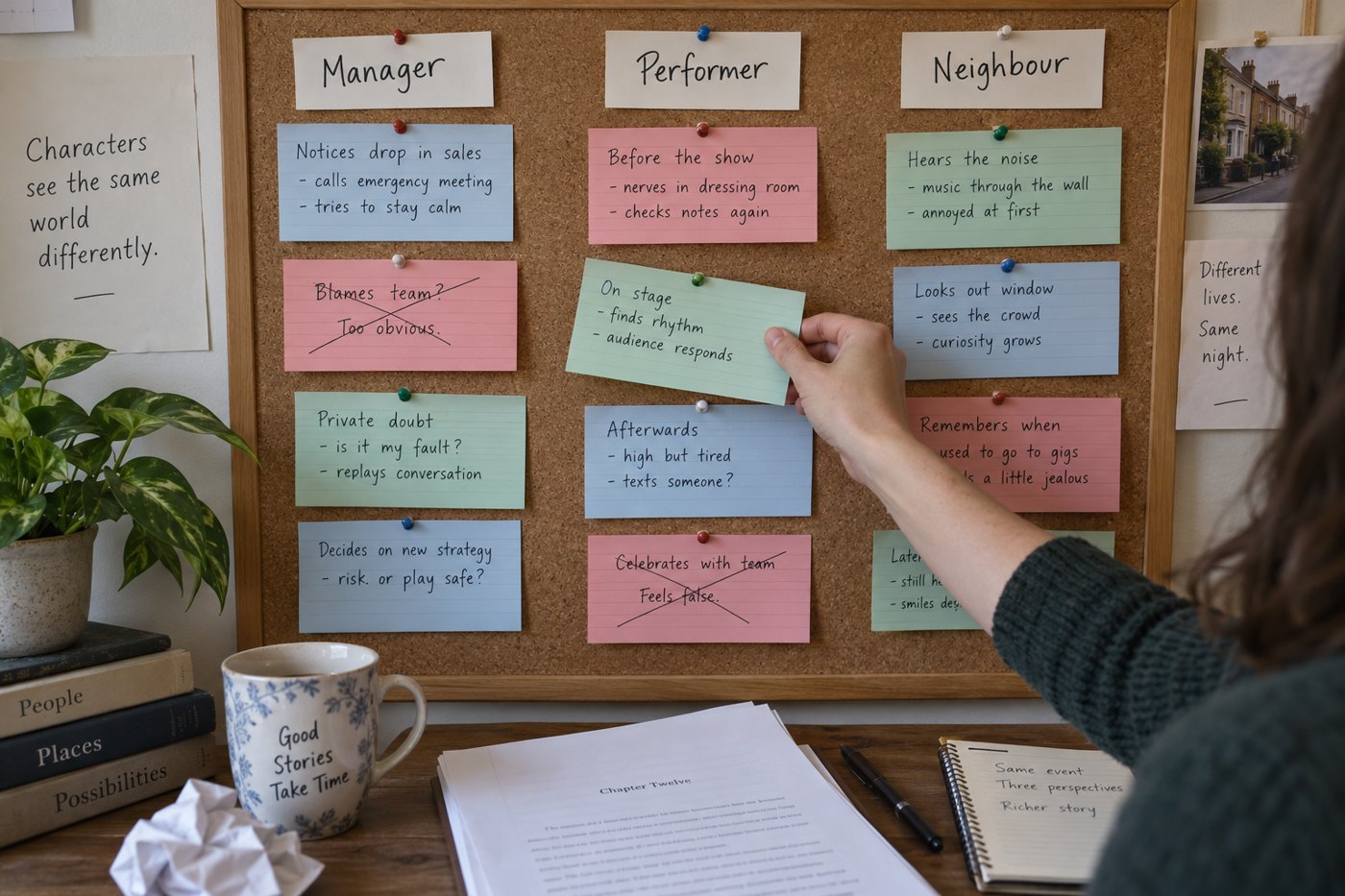
A novel may follow three people involved in closing a theatre: its manager, a performer and a neighbour who has campaigned against the noise. Each person has access to different events and interprets the closure differently. That difference can justify multiple viewpoints. Three narrators who see the same facts, hold the same values and want the same result may provide less range than their number suggests.
Write down what each viewpoint contributes that the others cannot. Access to a location is one answer, but consider emotional and interpretive access too. The manager understands the accounts; the performer experiences the loss of a community; the neighbour discovers that getting what they wanted has unexpected consequences. Their stories can illuminate one another without requiring equal page counts.
Also name the shared movement. What event, problem or relationship keeps these narratives in one book? If removing a viewpoint leaves the central movement unchanged, the strand may need stronger connections or a separate home. A fascinating character is not automatically a necessary narrator.
Use a small table or set of cards to record what each person knows at key points. Include discoveries, mistaken beliefs and information they conceal. This helps prevent a character responding to news they have not received. It also makes opportunities visible: the reader may know a fact that one viewpoint character still misinterprets.
Choose where that difference in knowledge creates interest. In the theatre example, the reader might know that the manager has declined a possible buyer while the performer believes no offer exists. The next conversation carries pressure because the audience can recognise the omission. You do not need every strand to conceal a secret, but you should understand the information pattern your switching creates.
Keep the planning method proportionate. A few characters and a short timescale may need only a page. A complicated chronology may warrant a spreadsheet. The system is useful when it prevents mistakes and helps decisions; it becomes a distraction when you spend more time maintaining categories than examining scenes.
Switching viewpoints at fixed intervals can create predictability even when the events have different weights. Return to a character because something consequential is ready to happen, because another strand has changed their situation or because the contrast will change the reader's understanding. An alternating pattern can still work, but each chapter must justify its place within it.
Avoid repeated versions of the same event unless the second version materially revises the first. A new emotional angle may be enough, but the reader should gain more than confirmation that another person was also present. Often the aftermath from a second viewpoint is more productive than replaying the entire encounter.
Watch the length of absences. If a character disappears for a large portion of the book, readers may need a small reorientation when they return. Remind them of the immediate objective or changed circumstance, not of every previous appearance. A distinctive concern can re-establish a voice faster than a biographical recap.
You do not need to give each narrator a conspicuous verbal tic. Distinction can come from what they notice and how they explain it. The manager sees an empty row as lost revenue; the performer remembers the people who sat there; the neighbour notices how sound passes through an open door. Vocabulary and rhythm can grow from those concerns.
Within a scene, establish the viewpoint early and respect its limits. A new paragraph alone may not adequately signal a move into someone else's private thoughts if the book has taught readers to expect one mind per scene. Use the transition system that matches the form you have chosen, and apply it consistently enough that readers can learn it.
Read each strand separately once to check its internal movement. Then read the chapters in their intended order to check what the interleaving changes. A strand that works alone can still interrupt another at the wrong moment; a sequence that looks balanced can contain long stretches with no consequence crossing between people.
At the ending, ask what each viewpoint helps resolve or complicate. Their outcomes need not be equally complete, but their presence should have mattered. Multiple viewpoints become a form of structure when one person's decisions change the possibilities available to the others.