Tools & workflow
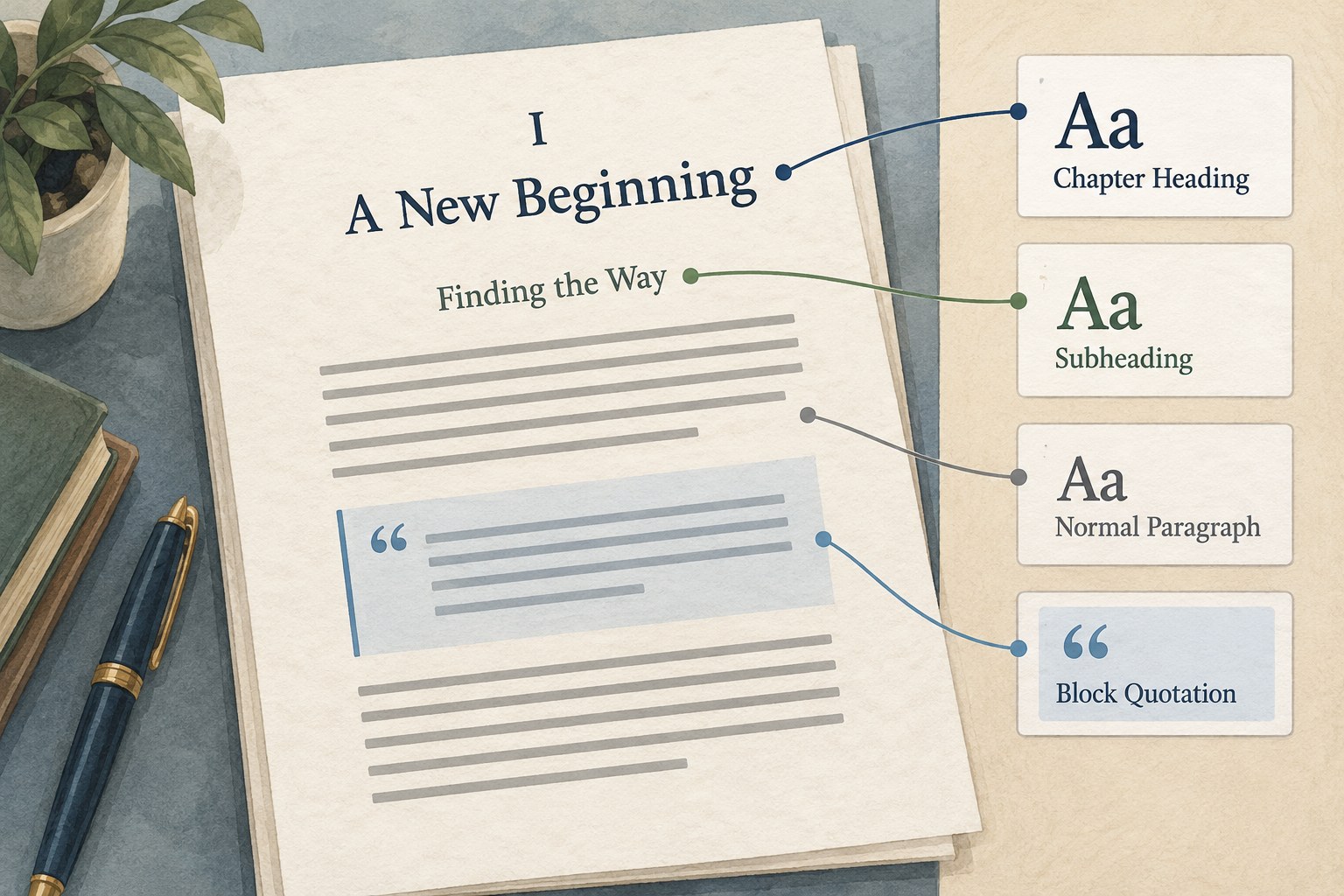
Document styles before the manuscript grows
Styles give repeated elements a shared identity, making long documents easier to revise and hand over.
Tools & workflow
Use the Binder to make the next piece of writing easy to find, and add structure only when the project needs it.
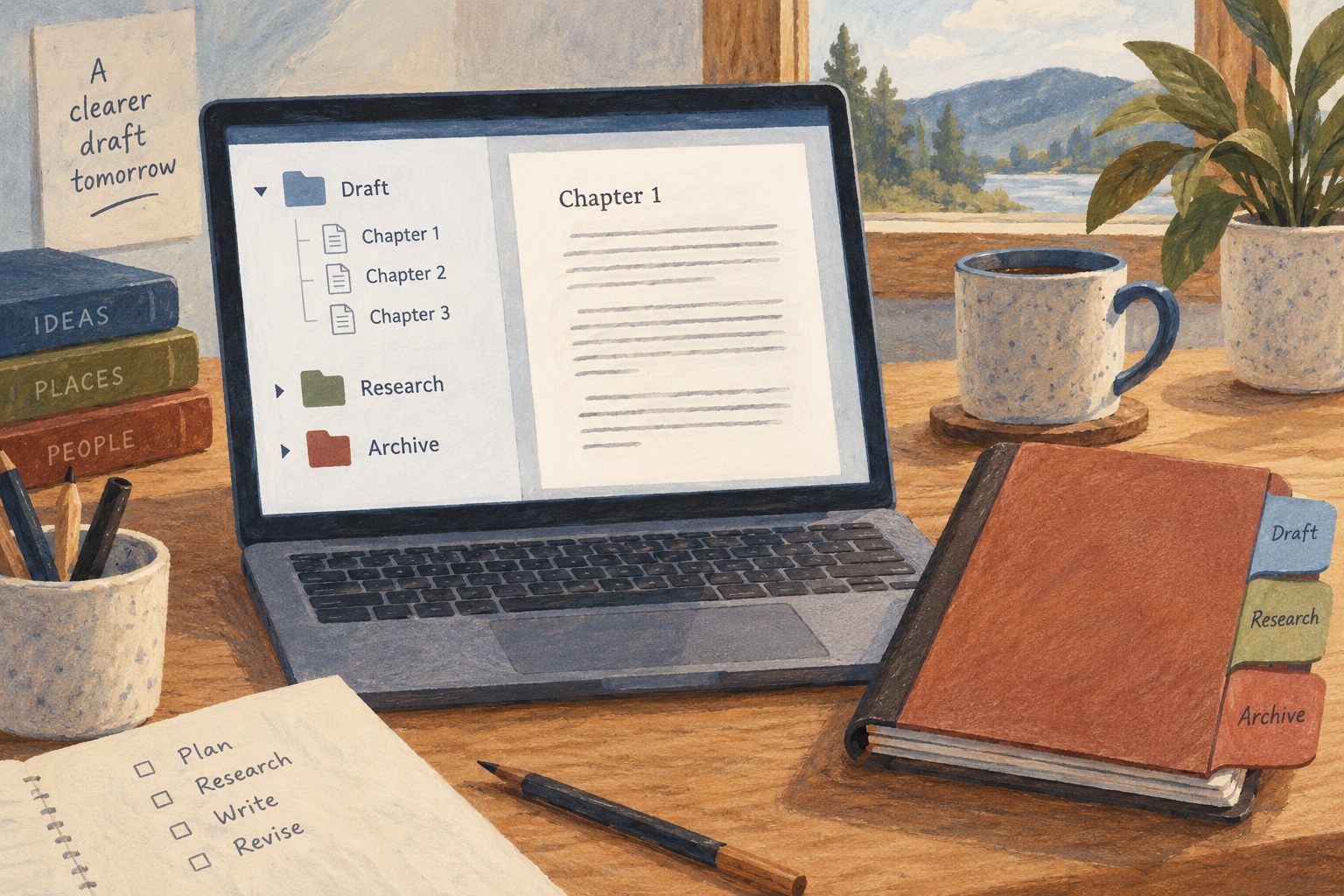
Scrivener can hold a manuscript in many pieces, which is useful when chapters or scenes need to move. That flexibility can also encourage elaborate folders before much has been written. Start with divisions that reflect the work you actually have: a draft area, supporting research and a place for material set aside.
Within the draft, choose a level of separation that helps you work. A scene-based novel may benefit from one document per scene inside chapter folders. An essay collection may need one document per essay. There is no advantage in breaking material into smaller pieces if the boundaries do not help you navigate or revise it.
Give documents names you can recognise later. A short description of the scene or section is often easier to use than a temporary number alone. Keep numbering in perspective while the order is changing; a title should help you identify the content without forcing a renumbering exercise every time something moves.
Store supporting material where it can be found, but distinguish it from text intended for publication. A clipped source, interview note or image may help the writing without belonging in the compiled manuscript. Review the relationship between the project's draft structure and its output settings rather than assuming everything in the Binder will be included.
Use labels, status fields or other metadata only when they support a decision you will make repeatedly. Marking a section “needs source check” can be useful if you later filter or review those sections. Maintaining several colour systems with no clear use creates administrative work without improving the manuscript.
Try the simplest arrangement for a few writing sessions before expanding it. A genuine retrieval problem is better evidence for a new folder or label than a desire to make the project look complete. Let the organisation follow the emerging work.
Literature & Latte describes Compile as the process that gathers project texts into a single output. Test that process with a small representative part of the manuscript before the deadline. Include headings, scene breaks, italics and any special elements the book uses.
Open the exported file in its intended destination and inspect it. The Binder is an authoring structure; the reader or editor will encounter the compiled document. Confirm that the order and formatting express the same hierarchy you intended in the project.
Keep the project backed up according to the application's guidance, and preserve a readable export at meaningful milestones. Before major reorganisation, make a recoverable copy so that an experimental structure can be compared with the previous one. A useful Scrivener project is one you can navigate, export and restore without needing to remember a complicated private system.
Tools & workflow
Styles give repeated elements a shared identity, making long documents easier to revise and hand over.
Tools & workflow
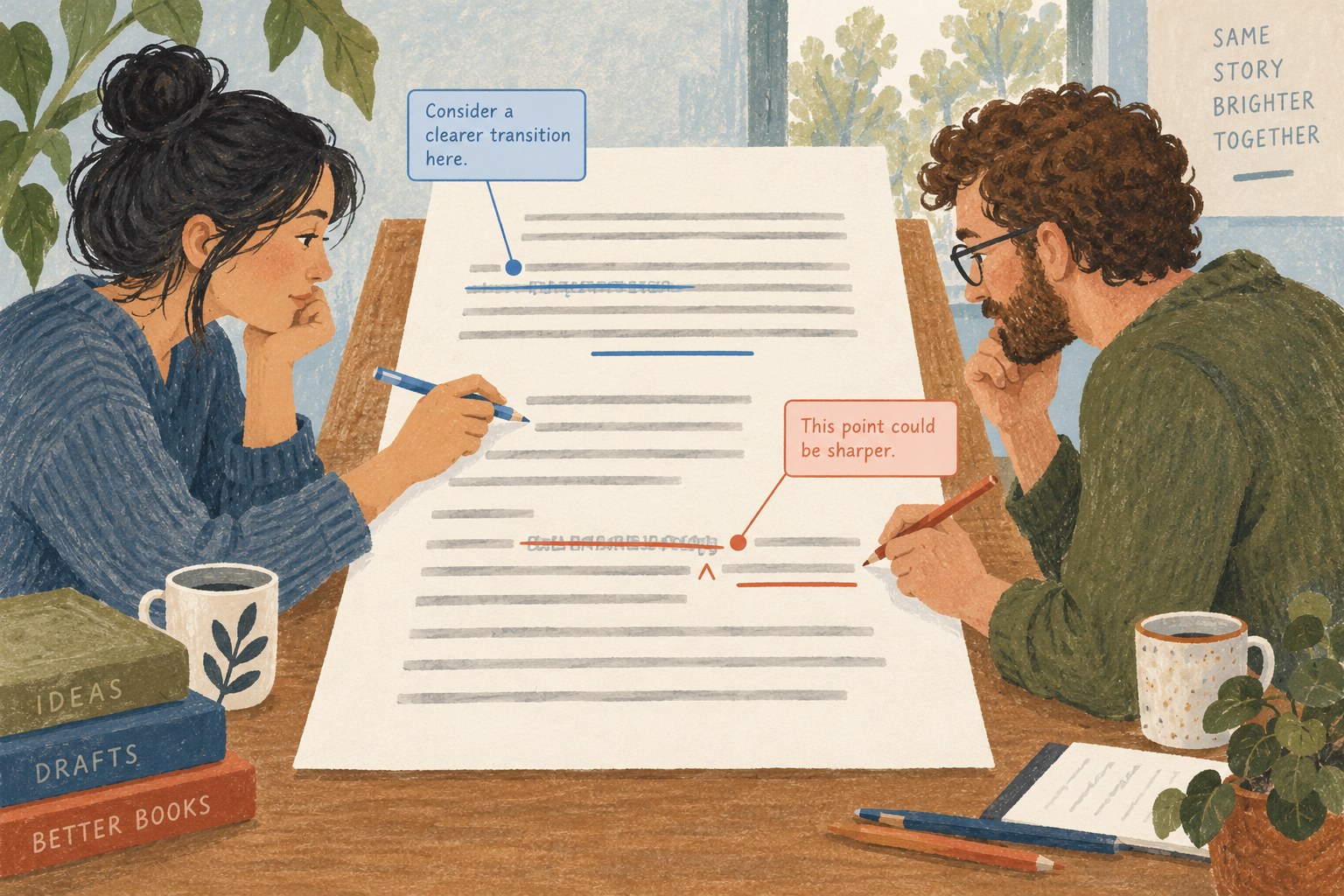
Agree how people should comment, suggest and approve changes before several voices enter the same document.