
Author marketing
Decide what an author mailing list will offer
Define the editorial promise, workload and subscription process before inviting readers to join.
Author marketing
Use the first message to confirm the subscription, deliver the promise and explain what happens next.
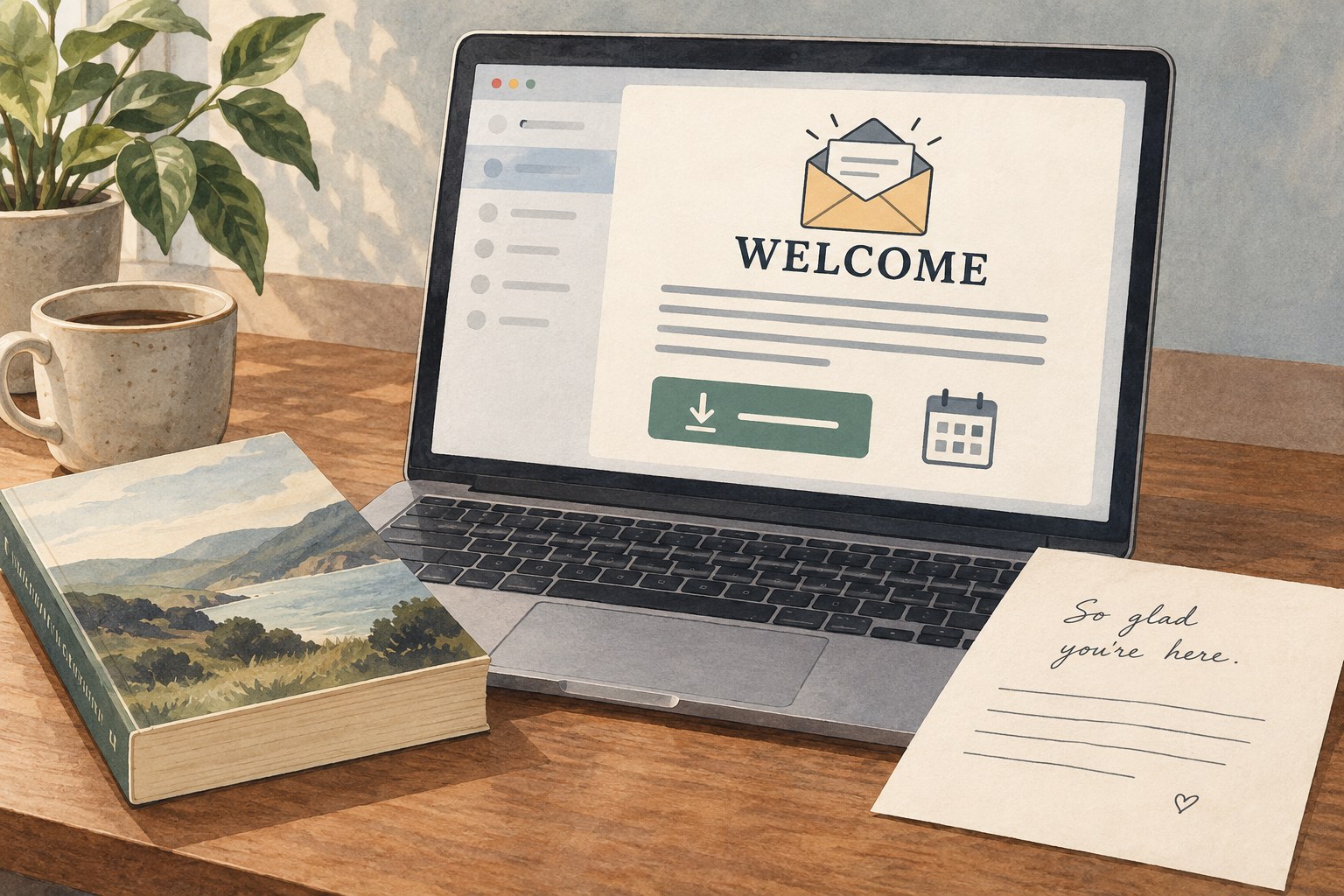
A welcome email reaches someone who has just made a small decision to hear from you. Start by acknowledging that decision in a way that identifies the list. A reader who joins several newsletters in one afternoon should not have to work out who you are from a vague greeting and an unfamiliar sender address.
Use the same author or publication name that appeared on the signup form. Explain briefly what the letter concerns. If the form promised occasional publication news, do not immediately introduce an unrelated weekly programme. The first message should confirm the agreement the reader thought they were making.
If a subscriber was offered an extract, reading list or other resource, make it easy to find. Label the link by what it opens and test it from a signed-out browser if the resource should be public. A link that works only in your own account is not a delivered benefit.
Explain any necessary format information without burdening the message with instructions. For example, a short note that an extract opens as a PDF may be enough. If several formats are available, use clear labels. Avoid sending the reader through another signup step to obtain the thing already promised.
You can introduce a book or another useful destination, but give the email a clear priority. A welcome message containing seven equally prominent requests is difficult to act on. Decide whether the main purpose is to deliver a resource, explain the letter or invite a reply, and arrange the message accordingly.
State the expected rhythm in terms you can maintain. “Usually once a month” is different from a guarantee of a particular weekday. If messages are only sent when there is substantive news, say that. Readers can then distinguish an intentional quiet period from a broken subscription.
Explain what kind of material belongs in the letter. A short sentence can mention the recurring subject and occasional announcements. Avoid an elaborate catalogue of future content unless it has actually been planned. The welcome email is an orientation, not a commitment to produce every idea you have considered.
If replies are welcome, use a monitored address and ask a question you genuinely want answered. A specific prompt about a reader's interest is easier to respond to than a broad request to “tell me everything.” Do not imply a personal reply will always arrive if you cannot provide one.
Send the message through the real subscription workflow using an address you control. Check the subject line, sender name, delivery of any resource and the unsubscribe route. View it on a phone, where long introductions and large graphics can push the promised link far down the screen.
Read it once as someone who has never seen your website. Remove references that depend on private context, replace unclear link labels and make sure the message does what the form promised. The strongest first email gives the new subscriber a useful reason to recognise the next one.
Author marketing
Define the editorial promise, workload and subscription process before inviting readers to join.
Author marketing
Choose a schedule from the material and time available, then make the expectation visible.